
The global healthcare cybersecurity market size is valued at USD 31.90 billion in 2025 and is predicted to increase from USD 37.32 billion in 2026 to approximately USD 142.45 billion by 2035, expanding at a CAGR of 16.12% from 2026 to 2035. The healthcare cybersecurity market is experiencing rapid growth due to strict regulatory compliance mandates and the rapid expansion of the Internet of Medical Things (IoMT) and cloud.
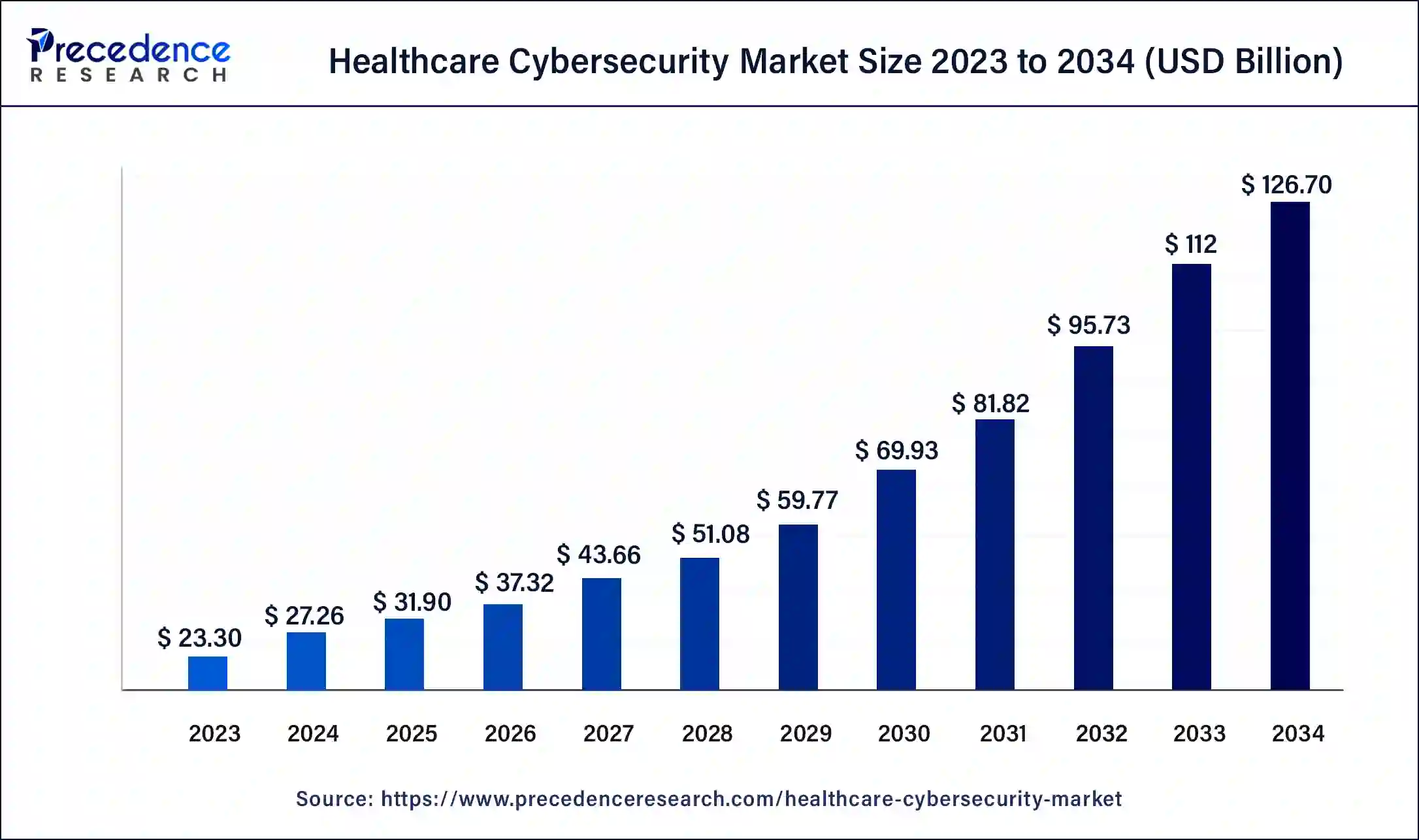
Healthcare Cybersecurity Market Overview
The healthcare cybersecurity market is experiencing rapid growth due to the increasing frequency of cyberattacks targeting healthcare organizations. Hospitals, pharmaceutical companies, healthcare payers, biotechnology firms, and telehealth providers are actively strengthening their cybersecurity infrastructure to protect critical systems and sensitive patient information.
North America currently dominates the market, accounting for over 41% of global revenue, driven by advanced healthcare IT infrastructure, stringent regulations, and significant investments in cybersecurity technologies. Meanwhile, Asia-Pacific is emerging as the fastest-growing region due to expanding healthcare digitization initiatives and increasing cybersecurity awareness.
Get Sample Link: https://www.precedenceresearch.com/sample/1739
Why Healthcare Needs Strong Cybersecurity
Healthcare data is among the most valuable types of information targeted by cybercriminals. Unlike credit card information, which can be changed quickly after a breach, medical records contain long-term personal details that can be used for identity theft, insurance fraud, and other criminal activities.
Healthcare organizations rely heavily on digital systems to manage patient care, schedule appointments, process insurance claims, and store medical records. Any disruption to these systems can directly impact patient safety and healthcare delivery.
Digital Healthcare and New Security Challenges
Digital healthcare solutions have transformed how healthcare providers interact with patients. Telemedicine platforms allow remote consultations, wearable devices continuously monitor patient health, and cloud-based systems enable seamless access to medical information.
While these innovations improve healthcare delivery, they also expand the number of potential entry points for cyberattacks. Every connected device, application, and cloud platform increases the attack surface that security teams must protect.
The Role of Artificial Intelligence in Cybersecurity
Artificial intelligence is transforming cybersecurity across the healthcare industry. Traditional security systems often struggle to keep pace with sophisticated cyber threats, but AI-powered solutions can analyze vast amounts of data and identify unusual patterns in real time.
Machine learning algorithms continuously learn from network activity and user behavior. This allows AI systems to recognize anomalies that may indicate ransomware attacks, compromised accounts, or insider threats.
AI also improves incident response by automating repetitive security tasks. Security teams can focus on critical threats while AI handles routine monitoring and analysis.
The Impact of Cyberattacks on Healthcare Services
Cyberattacks can have far-reaching consequences beyond financial losses. Healthcare organizations depend on digital systems to provide patient care, making cybersecurity incidents particularly disruptive.
- Operational Disruptions: Cyberattacks can prevent healthcare professionals from accessing patient records, scheduling systems, laboratory results, and medical imaging data. These disruptions may delay treatments and reduce healthcare efficiency.
- Financial Losses: Healthcare organizations often face substantial costs related to incident response, system restoration, legal proceedings, regulatory penalties, and cybersecurity upgrades following a breach.
- Damage to Reputation: Patients expect healthcare providers to protect their personal information. Data breaches can significantly damage public trust and negatively affect an organization’s reputation.
How Technology is Improving Healthcare Security
As cyber threats evolve, healthcare organizations are leveraging advanced technologies to strengthen their cybersecurity defenses. Modern security solutions provide real-time visibility into network activities, identify suspicious behavior, and help organizations respond quickly to potential threats.
One of the most important developments is the use of cloud security technologies. As healthcare providers migrate data and applications to cloud environments, cloud security platforms help protect sensitive information through encryption, access controls, and continuous monitoring.
Read More: Cell and Gene Therapy Market
Emerging Technologies Strengthening Healthcare Cyber Defense
Several emerging technologies are helping healthcare organizations build stronger cyber defenses.
- Zero Trust Security: Zero Trust security assumes that no user or device should be trusted automatically. Every access request must be verified, reducing the risk of unauthorized access.
- Blockchain Technology: Blockchain offers secure and tamper-resistant data storage. Healthcare organizations are exploring blockchain solutions to enhance data integrity and protect patient records.
- Advanced Threat Intelligence: Threat intelligence platforms provide real-time information about emerging cyber threats, enabling healthcare organizations to identify risks before attacks occur.
- IoMT Security Platforms: Specialized security solutions are being developed to protect connected medical devices and monitor vulnerabilities across healthcare networks.
Case Study Lessons from Large Healthcare Cyber Incidents
Recent healthcare cyber incidents have demonstrated the severe consequences of inadequate cybersecurity preparedness. Large-scale healthcare breaches have exposed millions of patient records while disrupting hospital operations and delaying critical care services.
Industry reports indicate that healthcare organizations are increasingly focusing on five critical controls:
- Multi-factor authentication (MFA)
- Immutable backups
- Secure email gateways
- Data governance programs
- Incident response exercises
Organizations implementing these controls have shown stronger resilience against ransomware and data breach incidents.
Healthcare Cybersecurity Market Regional Analysis
North America
North America dominates the healthcare cybersecurity market due to extensive healthcare digitization, high healthcare spending, strong regulatory frameworks, and growing cybersecurity investments. The region accounted for the largest market share in 2025 and continues to lead innovation and adoption.
Europe
Europe represents a significant market driven by GDPR compliance requirements, increasing healthcare modernization initiatives, and growing investments in healthcare IT security infrastructure.
Asia-Pacific
Asia-Pacific is expected to witness the fastest growth during the forecast period. Rapid healthcare digitalization, expanding telemedicine adoption, increasing cyberattack incidents, and government-led healthcare modernization programs are driving demand for cybersecurity solutions.
Latin America
Healthcare organizations across Latin America are increasingly adopting cybersecurity solutions as digital health services expand and awareness of cyber threats grows.
Middle East & Africa
The region is experiencing growing investments in healthcare infrastructure and digital transformation initiatives, creating opportunities for cybersecurity vendors to expand their presence.


