
Precision Fermentation Market Surges Toward USD 75.76 Billion by 2035
Precision Fermentation Market Size and Forecast 2025 to 2034

What is the Precision Fermentation Market Size in 2026?
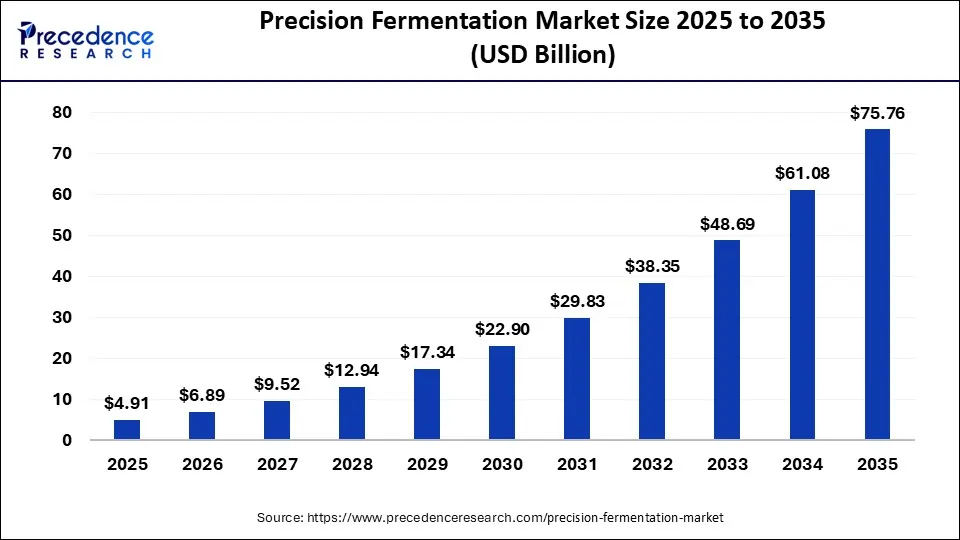
The global precision fermentation market is entering a transformative growth phase, with its valuation projected to rise from USD 6.89 billion in 2026 to approximately USD 75.76 billion by 2035, expanding at a CAGR of 31.47%.
Driven by increasing consumer preference for sustainable, animal-free proteins and rapid advancements in biotechnology, the market is gaining strong traction across food, pharmaceutical, and specialty ingredient industries.
Why is Precision Fermentation Becoming the Backbone of Future Food Systems?
Precision fermentation is redefining how proteins, enzymes, and bioactive compounds are produced. By leveraging genetically engineered microorganisms such as yeast and bacteria, companies are creating high-performance, animal-free ingredients with lower environmental impact.
The surge in demand for plant-based meat alternatives, dairy substitutes, and clean-label products is acting as a primary catalyst for market expansion. Additionally, growing concerns over greenhouse gas emissions and resource-intensive livestock farming are accelerating adoption globally.
What Are the Key Market Highlights?
The market is expected to reach USD 75.76 billion by 2035, growing at a CAGR of 31.47%.
Market size stood at approximately USD 4.91 billion in 2025, reflecting strong early-stage commercialization.
North America dominated the market due to high adoption of alternative proteins.
Food & beverages segment leads with over 60% share driven by dairy and meat alternatives.
Yeast-based fermentation holds the largest share owing to scalability and efficiency.
India is emerging as the fastest-growing market with over 51% CAGR through 2033.
How is Artificial Intelligence Accelerating Precision Fermentation?
Artificial Intelligence (AI) is becoming a critical enabler in precision fermentation by optimizing microbial strain development and fermentation conditions. Machine learning models are used to predict protein expression levels, reduce trial-and-error experimentation, and accelerate time-to-market for new ingredients.
Additionally, AI-driven bioprocess optimization helps improve yield efficiency and reduce production costs. This is particularly crucial for scaling precision fermentation technologies from laboratory to commercial manufacturing, making sustainable proteins more affordable and accessible.
Precision Fermentation Market Scope
| Report Coverage | Details |
| Market Size in 2025 | USD 4.91 Billion |
| Market Size in 2026 | USD 6.89 Billion |
| Market Size by 2035 | USD 75.76 Billion |
| Growth Rate from 2026 to 2035 | CAGR of 31.47% |
| Largest Market | North America |
| Base Year | 2025 |
| Forecast Period | 2026 to 2035 |
| Segments Covered | Application, Ingredient, Microbe, Fermentation Type, End Users, and Region |
| Regions Covered | North America, Europe, Asia-Pacific, Latin America and Middle East & Africa |
Market Growth Factors: What’s Driving the Rapid Expansion?
1. Sustainability Pressure on Traditional Agriculture
Livestock farming contributes significantly to carbon emissions and water consumption. Precision fermentation offers a low-impact alternative, making it highly attractive for environmentally conscious consumers and regulators.
2. Surge in Vegan and Flexitarian Diets
The global shift toward plant-based and hybrid diets is fueling demand for animal-free dairy proteins, egg replacements, and specialty ingredients.
3. Advances in Synthetic Biology
Breakthroughs in gene editing and microbial engineering are enabling the production of complex molecules with high precision and scalability.
4. Strong Investment and Startup Ecosystem
Venture capital funding and strategic partnerships are accelerating innovation and commercialization across the ecosystem.
What Are the Emerging Opportunities and Trends in the Market?
How are alternative dairy proteins reshaping the food industry?
Precision-fermented whey and casein proteins are enabling the creation of animal-free cheese, milk, and yogurt with identical taste and nutritional profiles.
Why is collagen becoming a high-growth segment?
Collagen derived from fermentation is gaining traction in nutraceuticals and cosmetics, offering ethical and sustainable sourcing.
Can precision fermentation expand beyond food?
Yes, the technology is increasingly used in pharmaceuticals, cosmetics, and industrial biotechnology, creating new revenue streams.
Market Dynamics
Key Drivers
One of the biggest factors driving the growth of the precision fermentation market is the rising demand for sustainable and environmentally friendly production methods. Precision fermentation uses microorganisms like yeast and bacteria to create products such as food, cosmetics, and pharmaceuticals. Compared to traditional methods like agriculture and animal farming, this approach uses fewer resources and generates lower greenhouse gas emissions, making it a cleaner and more sustainable alternative.
At the same time, consumers are becoming more aware of environmental issues such as deforestation, pollution, and climate change. This awareness is pushing them toward eco-friendly products, which is boosting demand for precision fermentation. Another major factor is the increasing need for alternative protein sources. As the global population grows, traditional protein production is becoming less sustainable. Precision fermentation offers a solution by enabling the production of protein-rich foods, including meat substitutes, without relying on animal farming.
Health and wellness trends are also playing a significant role. Today’s consumers are more conscious about what they eat and are actively looking for healthier options. Precision fermentation allows manufacturers to create products with lower sugar, salt, and fat levels, helping reduce risks associated with obesity, heart disease, and diabetes. It also supports the production of probiotics and nutrient-rich plant-based foods that are often seen as healthier than conventional animal-based products.
Key Challenges
Despite its potential, the market faces a few challenges. Since precision fermentation is still a relatively new technology, many consumers are unfamiliar with it. Some people are hesitant to accept products made using microorganisms, often due to concerns about safety and quality. Additionally, traditional food production methods have long-established supply chains and strong consumer loyalty, making it harder for new alternatives to gain widespread acceptance.
To overcome these barriers, companies need to focus on educating consumers about the benefits and safety of precision fermentation. Building trust through clear regulations, quality standards, and transparent communication will be essential. Businesses also need to ensure that their products meet consumer expectations in terms of taste, texture, and overall experience.
Opportunities
Precision fermentation opens up exciting opportunities, especially in the production of alternative proteins. It allows companies to create animal-free proteins that closely match the taste, texture, and nutritional value of traditional animal products. This can help meet growing protein demand while addressing environmental and ethical concerns.
Beyond food, the technology has strong potential in the biomedical field. It can be used to produce therapeutic proteins, vaccines, and personalized medicines more efficiently. With rising demand for biologics and increasing advancements in biotechnology, precision fermentation is expected to play a major role in the future of healthcare and drug development.
Segment Insights
By Application
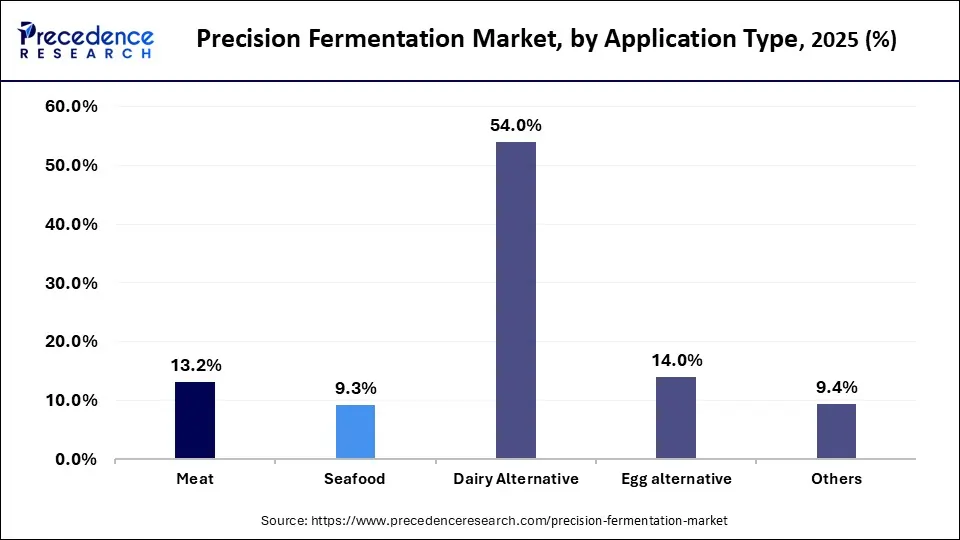
The market is divided into segments such as meat & seafood, dairy alternatives, egg alternatives, and others. Among these, meat and seafood alternatives hold a significant share due to the growing demand for plant-based and sustainable protein options. These products have the potential to transform the traditional meat industry.
Dairy alternatives also represent a major segment, driven by increasing demand for plant-based milk, cheese, and other dairy products. Overall, the shift toward sustainable and healthier food options is fueling growth across all application areas.
By Ingredient
In terms of ingredients, whey and casein proteins dominate the market. These proteins are widely used in health and fitness products because they support muscle growth and recovery. Precision fermentation makes it possible to produce these proteins more sustainably and cost-effectively.
Other important ingredients include egg white proteins, collagen, heme proteins, and enzymes, all of which are gaining traction due to their diverse applications in food and health industries.
By Microbe
Precision fermentation relies on microorganisms such as yeast, algae, fungi, and bacteria. Among these, bacteria play a key role due to their ability to optimize production processes and improve efficiency. Advances in genetic engineering are further enhancing the capabilities of these microbes, making production more scalable and cost-effective.
By Fermentation Type
Precision fermentation itself leads the market because it enables the production of high-quality, consistent, and scalable ingredients. Biomass fermentation is emerging as the fastest-growing segment due to its efficiency and cost advantages, especially in producing proteins and bio-based products.
By End User
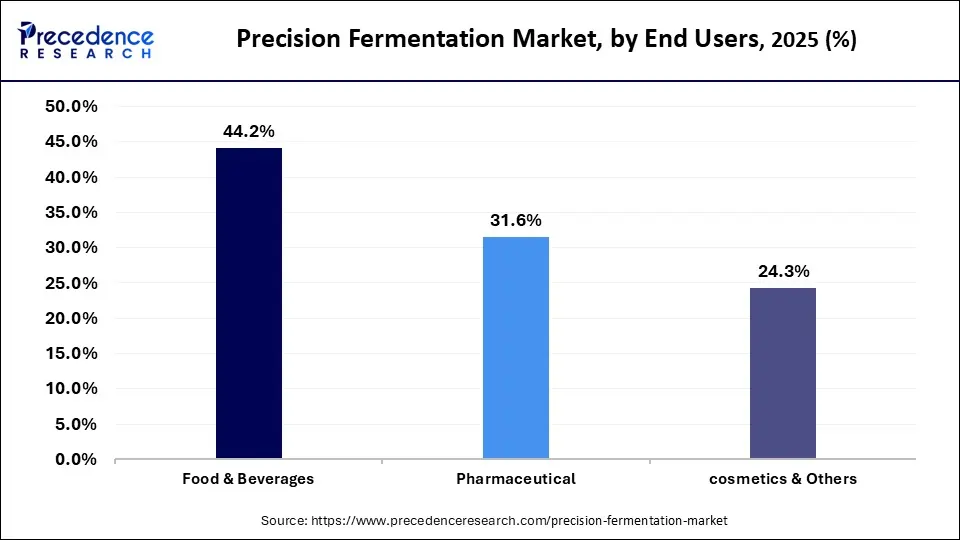
The food and beverage industry is the largest user of precision fermentation, driven by demand for plant-based and sustainable food products. Ingredients such as enzymes, flavors, and proteins produced through this technology are widely used in this sector.
Meanwhile, the pharmaceutical industry is growing rapidly as an end user. Precision fermentation is increasingly being used to develop drugs, vaccines, and therapeutic proteins more efficiently, making it a valuable tool in modern medicine.
Regional Insights
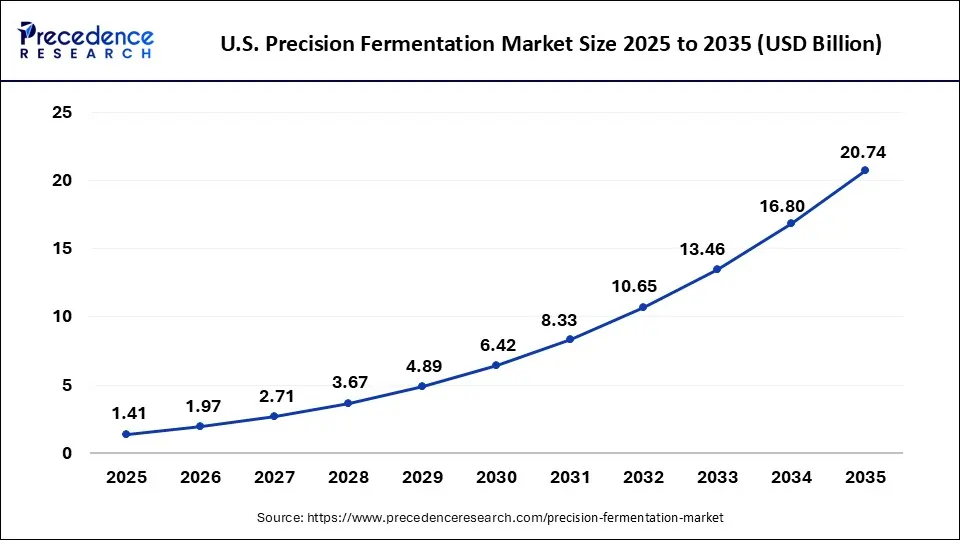
North America currently leads the precision fermentation market, with the United States at the forefront. The region benefits from strong technological infrastructure, active investment, and high demand for plant-based products.
Europe is also a significant market, particularly in countries like Germany, the UK, and France. The region’s focus on sustainability and reducing environmental impact is driving adoption.
Asia-Pacific is expected to experience the fastest growth. Factors such as large population, rising health awareness, increasing investments in biotechnology, and government support for sustainable food solutions are fueling expansion in this region. Countries like China are heavily investing in alternative protein technologies and fermentation capabilities.
In the Middle East and Africa, precision fermentation is gaining attention as a solution to food security and water scarcity challenges. Governments are supporting innovation in food technology to reduce reliance on imports.
Latin America is also emerging as a promising market, with countries like Brazil leading the way. The region’s strong agricultural base and growing interest in biotechnology are supporting the adoption of precision fermentation.
Precision Fermentation Market Companies
- Change Foods
- Geltor, Helania Inc
- Formo
- FUMI Ingredients
- Fybraworks Foods
- Imagindairy Ltd
- Eden Brew
- Impossible Foods Inc
- Melt & Marble
- Motif Foodworks, Inc
- Mycorena, Myco Technology
- New Culture
- Nourish Ingredients
- Perfect Day Inc
- Remilk Ltd
- Shiru Inc
- The Every Co.
- Triton Algae Innovations
Segments Covered in the Report
By Application
- Meat & Seafood
- Dairy Alternatives
- Egg Alternatives
- Others
By Ingredient
- Whey & Casein Protein
- Egg White
- Collagen Protein
- Heme Protein
- Enzymes
- Others
By Microbe
- Yeast
- Algae
- Fungi
- Bacteria
By Fermentation Type
- Precision Fermentation
- Biomass Fermentation
- Traditional Fermentation
By End User
- Food & Beverages
- Pharmaceutical
- cosmetics & Others
By Region
- North America
- Europe
- Asia-Pacific
- Latin America
- Middle East and Africa
Get Sample Link: https://www.precedenceresearch.com/sample/2821
Also Read : https://www.newsgazzete.com/textured-vegetable-protein-market/

