
Healthcare Cloud Computing Market Surges Toward USD 312.97 Billion by 2035
Healthcare Cloud Computing Market Size and Forecast 2025 to 2034

Rising Adoption of AI-Driven Data Systems and Telehealth Platforms Accelerates Market at 17.22% CAGR
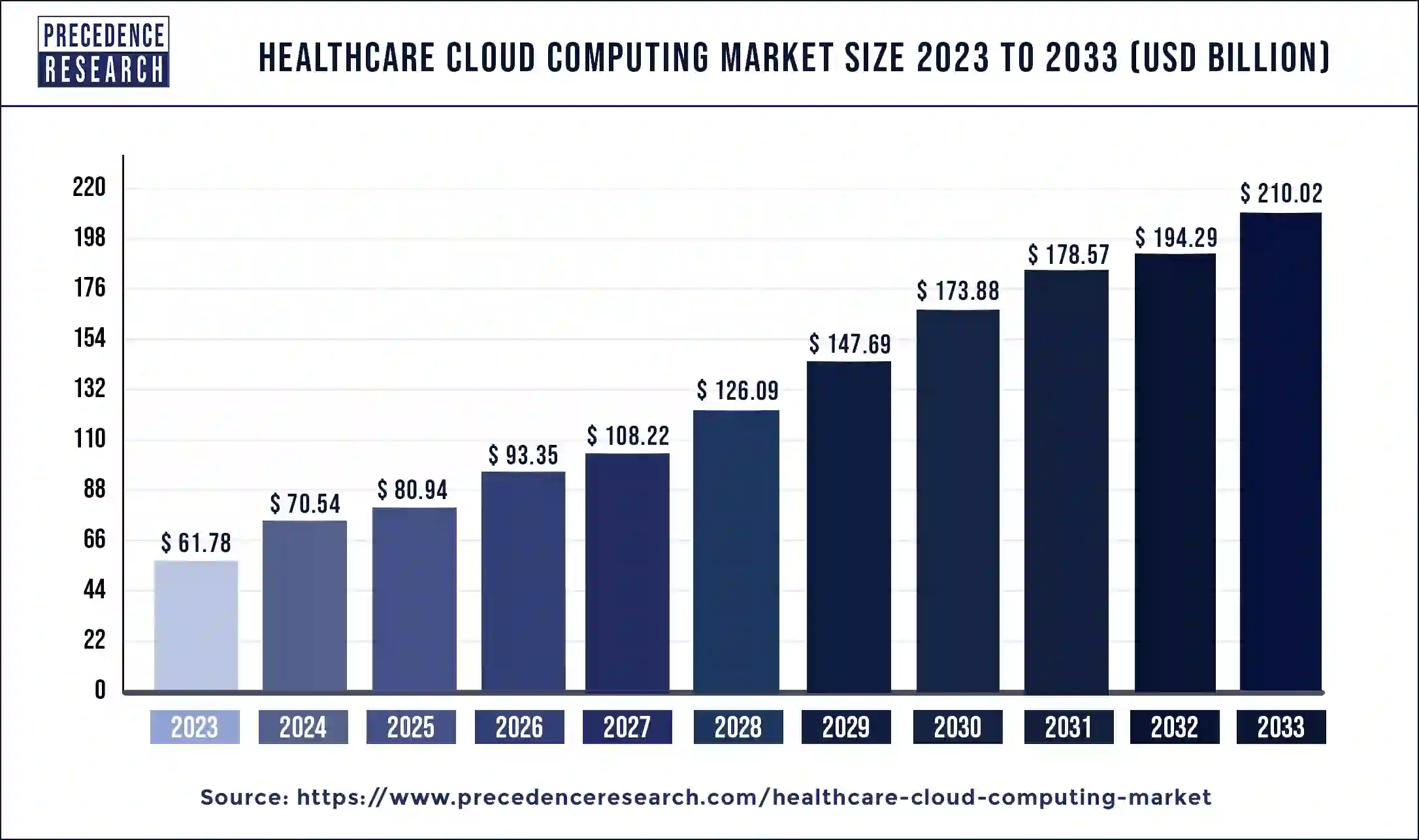
The global healthcare cloud computing market is undergoing a transformative expansion, driven by the rapid digitization of healthcare infrastructure, growing reliance on data analytics, and increasing demand for scalable IT solutions. According to Precedence Research, the market is projected to grow from USD 75.17 billion in 2026 to approximately USD 312.97 billion by 2035, registering a robust CAGR of 17.22% from 2026 to 2035.
Healthcare providers, payers, and governments are increasingly shifting toward cloud-based platforms to enhance interoperability, reduce operational costs, and enable real-time patient data access—marking a new era of connected healthcare ecosystems.
Quick Insights
The healthcare cloud computing market is expected to reach USD 312.97 billion by 2035, expanding at a CAGR of 17.22%.
North America dominated the market in 2025, accounting for over 41% share.
Asia Pacific is projected to be the fastest-growing region over the forecast period.
By deployment, private cloud held the largest market share in 2025.
By application, non-clinical information systems led the market in 2025.
Healthcare providers emerged as the leading end users, driving maximum revenue contribution.
How is AI Transforming the Healthcare Cloud Computing Market?
Artificial intelligence is playing a pivotal role in redefining cloud-based healthcare systems. AI-powered analytics integrated with cloud infrastructure allows healthcare organizations to process massive datasets, enabling predictive diagnostics, personalized treatment plans, and faster clinical decision-making. Cloud platforms equipped with AI are increasingly used for radiology imaging, disease detection, and patient risk stratification, significantly improving healthcare outcomes.
Moreover, AI enhances operational efficiency by automating administrative workflows such as billing, claims processing, and patient scheduling. When combined with cloud scalability, these capabilities reduce costs and improve system responsiveness. As healthcare systems transition toward value-based care models, AI-enabled cloud computing is becoming indispensable for delivering real-time, data-driven insights.
What are the Key Growth Drivers of the Market?
The healthcare cloud computing market is expanding due to a convergence of technological and demographic factors.
Firstly, the rising prevalence of chronic diseases and aging populations is generating vast amounts of patient data, necessitating scalable and secure storage solutions. Secondly, the increasing adoption of telehealth, electronic health records (EHRs), and mobile health applications is accelerating the demand for cloud-based infrastructure.
Additionally, healthcare providers are shifting away from traditional IT systems to cloud platforms to reduce infrastructure costs, improve interoperability, and ensure regulatory compliance. The integration of IoT devices and wearable technologies further contributes to real-time data generation, reinforcing the need for cloud-based data management systems.
Market Scope
| Report Highlights | Details |
| Market Size in 2025 | USD 63.90 Billion |
| Market Size in 2026 | USD 75.17 Billion |
| Market Size by 2035 | USD 312.97Billion |
| Growth Rate from 2026 to 2035 | CAGR of 17.22% |
| Largest Market | North America |
| Fastest Growing Market | Asia Pacific |
| Base Year | 2025 |
| Forecast Period | 2026 to 2035 |
| Segments Covered | Product, Cloud Deployment, Application, Service, End User, Region |
| Regions Covered | North America, Europe, Asia-Pacific, Latin America and Middle East & Africa |
What Opportunities and Trends are Shaping the Future of the Market?
Is Telehealth Driving Cloud Adoption?
Yes, the surge in telehealth and remote patient monitoring is significantly boosting cloud adoption, as providers require secure, scalable platforms to deliver virtual care efficiently.
Will Hybrid and Multi-Cloud Models Dominate?
Hybrid and multi-cloud deployments are gaining traction due to their flexibility, allowing healthcare organizations to balance security, cost, and performance.
How is Data Interoperability Creating Opportunities?
The push toward seamless data exchange across healthcare ecosystems is opening new opportunities for cloud vendors offering interoperable solutions.
Segment Insights
Application Insights
The clinical information systems (CIS) segment includes solutions such as telehealth, computerized physician order entry (CPOE), population health management (PHM), electronic medical records (EMR), pharmacy and radiology information systems, and more.
Over the past two decades, CIS has become a core part of healthcare. Today, these systems are used across all types of healthcare settings—from small clinics to large hospitals, pharmacies, and even blood banks. They can function as standalone tools or as integrated systems that connect multiple modules into a comprehensive healthcare IT network.
Modern healthcare software now performs a wide range of functions, and even basic medical devices are evolving into connected systems that integrate with larger electronic health record (EHR) platforms.
Telehealth, supported by secure messaging, has made it possible for patients and providers to communicate beyond physical locations. Health information exchanges further enable seamless communication between different providers and organizations. These systems help track patient history, improve preventive care, and enhance treatment outcomes.
Due to these advancements, the CIS segment captured a significant market share in 2023. The growth is largely driven by the increasing need to manage vast amounts of clinical data—such as physician notes, prescriptions, and pharmacy records—generated every day. This has created a strong demand for advanced data management and healthcare information systems.
Deployment Insights
The healthcare cloud computing market is divided into private cloud, public cloud, and hybrid cloud.
Private cloud held a major share in 2024 because healthcare organizations prioritize data security. Sensitive patient information must be stored in a secure environment to avoid privacy breaches and legal risks.
Hybrid cloud is rapidly gaining popularity. It combines on-premises systems with both public and private cloud environments, allowing organizations to move workloads efficiently and securely based on their needs.
Healthcare organizations are increasingly shifting toward flexible and modern IT infrastructures. Hybrid cloud solutions provide scalability, agility, and better performance by combining the strengths of traditional systems and cloud technologies.
In fact, adoption is accelerating—according to an IBM study, 82% of healthcare and life sciences leaders plan significant investments in hybrid cloud solutions.
Services Insights
The market includes three main service models:
Infrastructure-as-a-Service (IaaS)
Platform-as-a-Service (PaaS)
Software-as-a-Service (SaaS)
Among these, SaaS dominated the market in 2025 due to its advantages such as:
Lower upfront costs
Faster deployment
Reduced total cost of ownership
Improved security
Many SaaS solutions now incorporate AI capabilities, making them smarter and more automated. Healthcare organizations are increasingly adopting AI to improve efficiency, reduce manual work, and enhance decision-making.
As organizations gain experience with multiple cloud providers, they are focusing on more integrated strategies for managing and analyzing healthcare data. The use of APIs (like Google Health tools) is also transforming how companies handle big data, contributing to a projected 19.6% growth in cloud-based application adoption.
End-User Insights
Healthcare payers—including insurance companies, employers, and third-party administrators—are expected to see steady growth.
These organizations are adopting cloud computing for:
Fraud detection
Claims processing
Secure data storage
Risk assessment
Cloud solutions help payers improve efficiency, reduce costs, and enhance service quality. They also support business expansion and better management of high-risk patient populations.
In the healthcare ecosystem, payers are responsible for managing payments, claims, and pricing. Examples include Medicare, Medicaid, and private insurers. In many markets, hundreds of insurance providers collectively contribute to both public and private healthcare coverage.
Regional Insights
North America
North America leads the healthcare cloud computing market and is expected to maintain its dominance.
The United States plays a key role due to:
High adoption of digital healthcare technologies
Strong government support (e.g., HITECH Act)
Advanced healthcare IT infrastructure
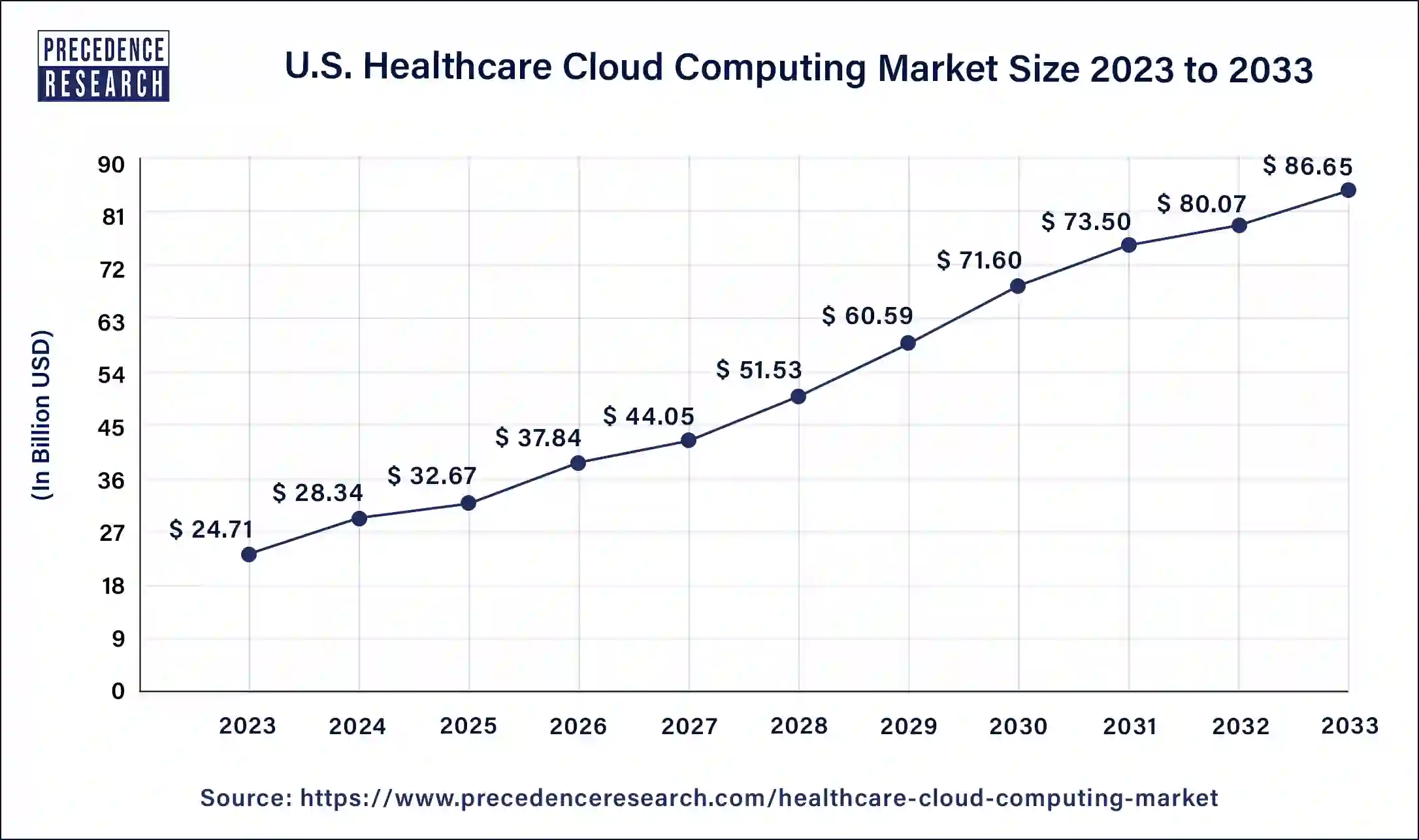
The U.S. market is projected to grow from USD 23.58 billion in 2025 to USD 117.9 billion by 2035, at a CAGR of 17.46%.
Patient portals are a major driver in this region. These platforms allow patients to access their health data anytime, communicate with doctors, and manage their care more effectively. Increasing investments in mobile health apps and messaging systems are further boosting adoption.
Canada
Canada is also advancing in healthcare cloud adoption, especially through telehealth services. Programs like Telehealth Ontario provide 24/7 medical advice, helping reduce pressure on healthcare systems and shorten wait times.
An aging population is another key factor driving demand for digital health and cloud solutions, particularly for managing chronic conditions.
Europe
Europe is experiencing strong growth due to:
Increasing use of electronic health records
Rising adoption of telemedicine
Strict data protection regulations (like GDPR)
Government support for digital healthcare
Healthcare providers in the region are moving toward cost-efficient and interoperable IT systems to improve patient outcomes.
Asia Pacific
Asia Pacific is expected to see the fastest growth.
Countries like China, India, Japan, and South Korea are rapidly adopting:
Telemedicine
Electronic health records
Healthcare analytics
Government initiatives and the presence of major cloud providers like AWS, Google Cloud, and Microsoft Azure are accelerating this transformation.
Japan
Japan stands out due to its advanced healthcare infrastructure. Around 73% of hospitals use electronic medical records, especially larger facilities.
However, fully paperless systems are still limited. With a growing elderly population, demand for telehealth and remote monitoring solutions is increasing.
Healthcare Cloud Computing Market Companies
- Allscripts Healthcare Solution Inc
- Microsoft Corp
- Iron Mountain Inc
- Qualcomm Inc
- AthenahealthInc
- GNAX Health
- EMC Corp
- VMware Inc
- Others
Segments Covered in the Report
By Product
- Healthcare Provider Solutions
- Clinical Information Systems
- EHR/EMR
- Telehealth Solutions
- PACS/VNA
- PHM Solutions
- LIS
- PIS
- RIS
- Non-clinical Information Systems
- RCM Solutions
- HIE Solutions
- Financial Management Solutions
- SCM Solutions
- Billings and Account Management Solutions
- Clinical Information Systems
- Healthcare Payer Solutions
- Claims Management Solutions
- Payment Management Solutions
- Provider Network Management Solutions
- Fraud Management Solutions
- CMR Solutions
By Deployment
- Public
- Private
- Hybrid
By Application
- Clinical Information System
- Telehealth Solutions
- Computerized Physician Order Entry
- Population Health Management (PHM) Solutions
- Electronic Medical Records
- Pharmacy Information System
- Radiology Information System
- Others
- Non-clinical Information System
- Revenue Cycle Management (RCM)
- Billing & Accounts Management Solutions
- Claims Management
- Others
By Service
- Platform as a service (Paas)
- Infrastructure as a service (Iaas)
- Software as a service (Saas)
By End Users
- Healthcare Providers
- Healthcare Payers
By Region
- North America
- Europe
- Asia Pacific
- Latin America
- East & Africa
Get Sample Link: https://www.precedenceresearch.com/sample/1081
Also Read : https://www.businesswebwire.com/silver-wound-dressing-market/

